
U.S. Marshals Release Paths
No dedicated USMS detention center was substantiated in Yancey County. The official Yancey Sheriff page documents the county facility, not a standing federal center. USMS may place a prisoner in a contracted jail, and federal responsibility can continue while the physical holder changes.
A federal pretrial prisoner can leave USMS responsibility after acquittal or a release order. After conviction, USMS commonly delivers a sentenced prisoner to BOP. Another sovereign may also take custody under a supported warrant or detainer. Each outcome ends one custody segment but does not always place the person in the community.
| USMS outcome | What it means | Where to verify |
|---|---|---|
| Release by federal order | Marshals custody is authorized to end | Federal docket and actual holder |
| Delivery to BOP | Sentenced federal custody continues | BOP locator after admission |
| Transfer to another authority | Custody continues under a receiver | Transfer record and receiving system |
| No public result | Expected because USMS has no public former-prisoner locator | Docket, holder, and focused records route |
Confirm a U.S. Marshals Release
Start with the federal criminal docket and find the detention, release, acquittal, judgment, or commitment entry. A signed order explains the court’s legal action. It does not always prove the moment the holding facility completed processing, so contact the named holder for the physical departure. If the person was convicted and committed, look for delivery to BOP rather than assuming community release.
- Confirm the federal case and district through the docket or known court record.
- Identify the detention order and the facility that physically held the prisoner.
- Look for a later release order, acquittal, judgment and commitment, or transfer entry.
- Ask the actual holding facility to confirm whether its custody ended and where the person went.
- If sentenced custody followed, search BOP after enough time for admission data to appear.
- For a documentary gap, make a focused request using the case number, identifiers, holder, and dates.
The official USMS prisoner-custody overview explains the agency’s responsibility from court-ordered custody through release or BOP delivery.
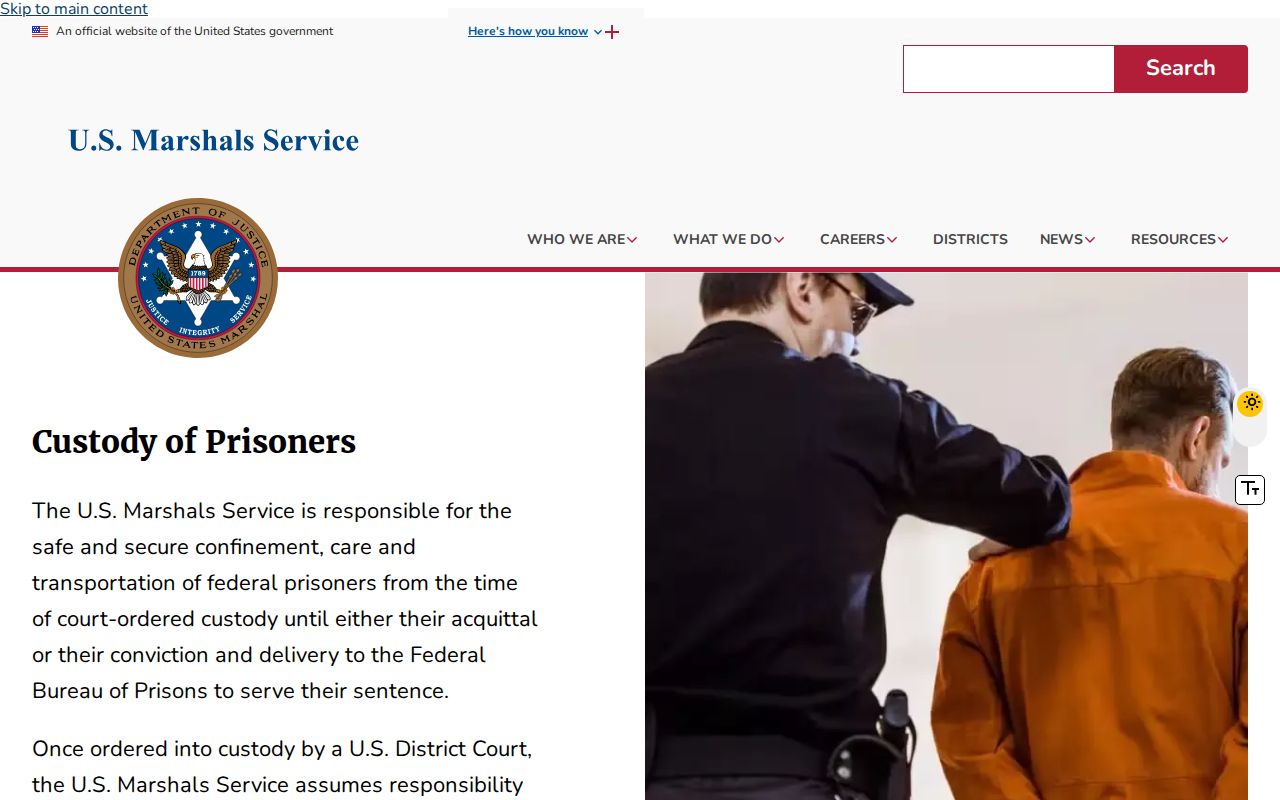
The overview shows why the court and holding facility are essential when no public former-prisoner search exists.
U.S. Marshals Release Records
USMS uses internal prisoner-processing and population-management records, but its Prisoner Tracking System is not a public name locator. A record request should identify the federal case number, full name, known prisoner identifier, approximate custody dates, federal district, and holding facility. Ask for a particular existing custody or movement record rather than a new narrative.
The federal docket is often the first documentary channel because it can show the detention and release authority. The actual holder records facility arrival and departure. USMS tracks federal responsibility, while BOP begins its own record after sentenced delivery. Those three timestamps may not be identical.
- Commitment
- A court order placing a person in federal custody under stated authority.
- Holding facility
- The jail or institution that physically houses a USMS prisoner.
- Delivery to BOP
- The transition from Marshals responsibility to federal sentenced custody.
- Detainer
- A supported request or basis for another authority to assume custody.
The agency’s Prisoner Tracking System description documents the internal record system.
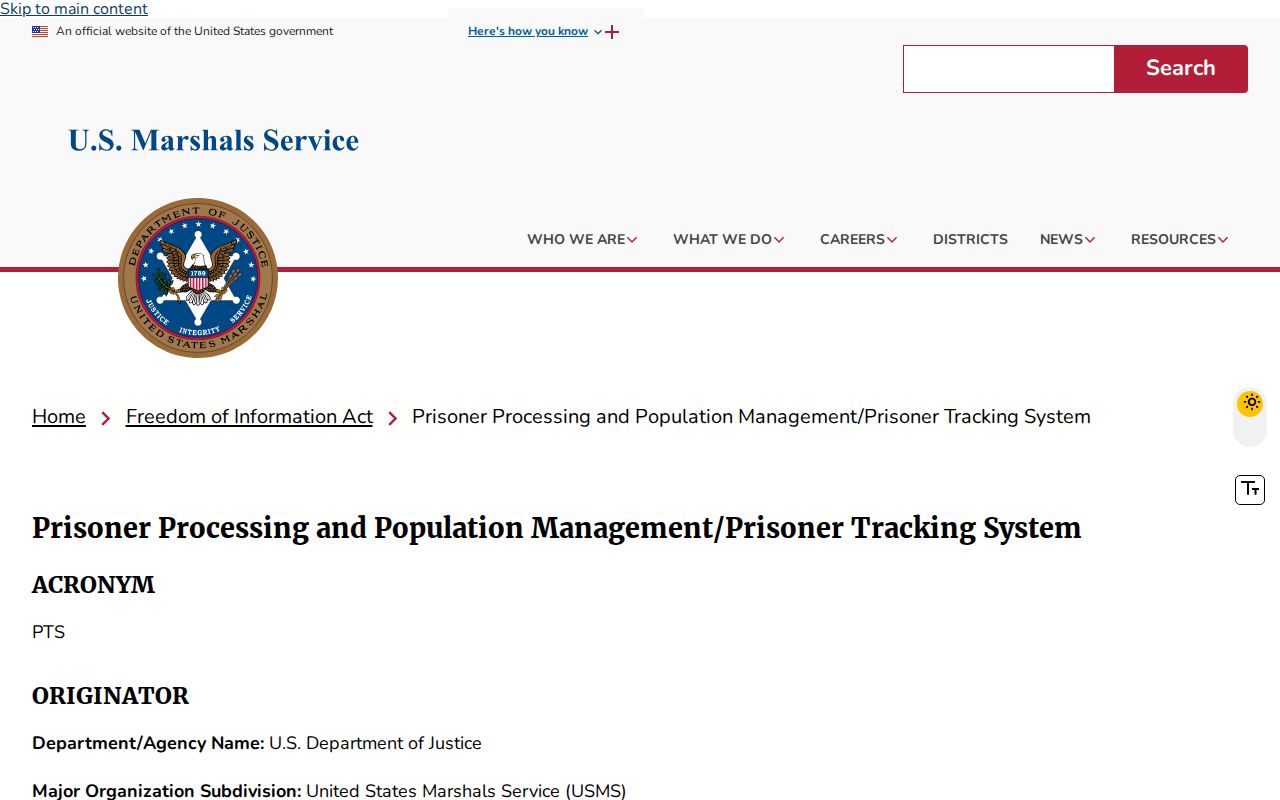
The capture supports a focused records route, not a claim that members of the public can search the tracking database by name.
U.S. Marshals Release Contacts
Route the question by function. The federal court clerk can identify docket entries. The actual jail can confirm its custody segment subject to disclosure rules. USMS is the responsible federal prisoner agency before release or BOP delivery. BOP becomes the public search path only after federal sentenced admission.
U.S. Marshals Service Prisoner OperationsFederal pretrial and court-ordered custody
No public former-prisoner locator
Use the official district, docket, holder, and USMS records channels
No USMS detention facility was found in Yancey County. The Yancey jail should be contacted only if a case-specific record shows it was the physical holder.
About U.S. Marshals Custody
USMS custody is a legal responsibility that can span several physical facilities. A person may move without leaving Marshals custody. That is why a departure date from one contracted jail cannot be called a federal release until the receiving authority or federal order is known.
USMS disclosure rules limit personal histories, prisoner photographs, and arrival or departure timing in important circumstances. A public request may therefore return redactions or withheld material. The federal docket and authorized communications with the holder remain separate access channels.
A Yancey connection might be a prior county booking, residence, or arrest location. None establishes federal custody on its own. Use a case-specific federal record before invoking the USMS path.
USMS Versus BOP Custody
The BOP Inmate Locator is not a pretrial locator. It becomes useful after a federal conviction and delivery into BOP’s sentenced system. A person can therefore be in valid USMS custody yet have no useful BOP result. Conversely, a former USMS prisoner later marked RELEASED by BOP completed a later custody segment that is distinct from the pretrial detention.
Use sequence, not assumptions: federal order, USMS custody, physical holder, then acquittal or release, or conviction and BOP delivery. If ICE or a state takes custody afterward, add that receiving system to the chain.
Read U.S. Marshals Records
A useful Marshals verification joins identity, case number, custody authority, physical holder, admission or movement date, and outcome. The docket may show an order without a jail processing time. A holder may show departure without the legal reason. The internal tracking record may show movement without making every field public. Reconcile all three.
If the outcome was BOP delivery, wait for and search the BOP record. If the outcome was release by the court, retain the signed order and confirm the holder completed release. If another authority received the person, follow its locator or records process.
The Yancey County custody search helps identify the right system when a county TRANSFERRED entry is the only starting clue.
After a U.S. Marshals Release
A release order can impose conditions while a federal case continues. Later supervised release generally follows a prison sentence and belongs to the court and federal probation path. Read the exact order rather than using the word release as proof that the case or all restrictions ended.
When another sovereign receives the person, transportation and release planning belong to that authority. A USMS transfer is not a reason to arrange pickup at the former holder. Confirm the new custodian first.
No local USMS release desk or pickup site was verified in Yancey County. The physical holder controls operational timing, while the federal court controls the legal order. Contact both through official channels when timing matters.
Timing differences are normal across this chain. A judge may sign an order before the clerk posts it. USMS may transmit authority before the holder completes release processing. A jail departure may occur before a public docket update. Record each timestamp with its source instead of forcing them into one event. For urgent confirmation, ask the actual holder whether physical custody remains.
Photographs and personal histories require extra care. USMS guidance limits disclosure of prisoner photographs and other information, including sensitive arrival and departure details. A missing public image or withheld field is not evidence that the detention did not occur. Use the docket, identity data, and custody records that the responsible agencies can lawfully provide.
When the outcome is release by order, retain the order and confirm departure with the holder. When the Yancey feed shows only local TRANSFERRED status, obtain the receiver before assuming USMS. After federal conviction, locate the judgment and search BOP following delivery.
A focused USMS request should name the case, prisoner, identifier, dates, district, holder, and existing record. If the question concerns only the earlier Yancey booking, use the county’s official records-request process. That separation distinguishes federal custody from a local episode.
Do not treat the location of a contracted bed as the agency that ordered custody. The holder manages physical confinement, USMS maintains federal prisoner responsibility, and the court supplies legal authority. A complete release verification may need all three even when they refer to the same person and date.
Preserve the Yancey inmate ID, federal case number, and any later BOP register number as separate identifiers. Their sequence can connect the county, pretrial, and sentenced segments. Reusing one number across all three systems would create a false record match and obscure which agency can answer a correction request.