
Yancey Parole, Probation, and Supervision
North Carolina uses three distinct forms of supervision. Probation is imposed by a court, often instead of a prison term. Parole is discretionary early release for eligible older-law cases. Post-release supervision is the mandatory period that follows prison for current Structured Sentencing cases. A person can be out of confinement while the North Carolina Department of Adult Correction, or NCDAC, still lists an active community status. “Released” and “discharged” are not interchangeable.
The comparison matters when reading a Yancey County release. An OUT entry in the sheriff feed means county custody ended. It does not say whether a court imposed probation. An NCDAC record with inactive incarceration and active post-release or parole status means prison custody ended but supervision remains. The legal status and assigned office on the state detail are stronger than a guess based on residence.
| Status | How it begins | Best verification |
|---|---|---|
| Probation | Court order, sometimes instead of incarceration | Court judgment plus NCDAC supervision detail |
| Parole | Commission approval in an eligible older-law case | NCDAC detail and Commission publication |
| Post-release supervision | Mandatory period after a Structured Sentencing prison term | NCDAC status and assigned supervision office |
- Discharge
- The formal end of the sentence or supervision term.
- Absconder
- A supervised person reported as failing to remain in required contact.
- Interstate compact
- A formal transfer of supervision between states, not a discharge.
Verify Yancey Post-Release Status
Use the NCDAC Offender Public Information search for a person who served a state term or entered state supervision. The search hub contains current and historical state information, not a complete county-jail archive. Search by offender number when known. Otherwise compare the full name, middle name, birth information, and other identifiers before opening a result.
- Select a status that includes an Active Probationer/Parolee, or search all statuses when the expected status is uncertain.
- Open the matching detail and copy its exact incarceration, inmate, and Probation/Parole/Post Release status terms.
- Read the listed Probation/Parole Office. Do not choose an office solely from a home address or Yancey release location.
- Compare the state status with the court judgment when probation was imposed, or with the actual prison-release entry for post-release supervision.
- Call the assigned unit to verify its published office contact and current reporting direction. Do not rely on secondhand schedules.
A Yancey jail-only booking may never appear in NCDAC. For that event, the Yancey County released-inmate search and records path uses the sheriff release entry and court file. NCDAC becomes relevant when the facts show a state sentence, transfer, probation, parole, or post-release term.
Yancey Supervision Office Assignment
Yancey County is in NCDAC Judicial Division 4, Judicial District 24. The district spans Avery, Madison, Mitchell, Watauga, and Yancey counties. Its official field-contact directory lists a Burnsville office, but a particular record’s assigned Probation/Parole Office controls the verification call. Release county, conviction county, current address, and supervising district can differ.
NCDAC Community Supervision, Judicial District 24District manager: Michael Lawing
1040 East US Highway 19E, Office H
Burnsville, NC 28714
828-689-8967 or 828-689-8968
Fax: 828-689-8966
Check the official Community Supervision field contacts before using the listing. State-level questions may be directed to the Division of Community Supervision, 2020 Yonkers Road, MSC 4250, Raleigh, NC 27699-4250, at 919-716-3100. An interstate move must be reconciled through the sending and receiving systems because transfer does not end supervision.
The NCDAC Community Supervision overview explains the statewide roles. Its overview is useful context, while the individual offender detail remains the route to the right local unit.
Yancey Absconder Status and Warrants
NCDAC maintains a separate official Absconder Search. An absconder entry means the agency reports that a person under supervision failed to maintain required contact. It does not undo the past release, prove a new arrest, or identify every possible warrant. Likewise, no result does not prove that supervision was completed.
Yancey County did not expose a separate official county absconder or warrant list during the research sweep. Verify a supervision status through NCDAC and an alleged warrant through the proper court or law-enforcement channel. A VINE custody alert concerns custody movement, not every change in probation or parole compliance. Conditions and responses are individualized, so public pages should not be used to infer private check-in rules.
The NCDAC absconder interface shows the limited purpose of this search.
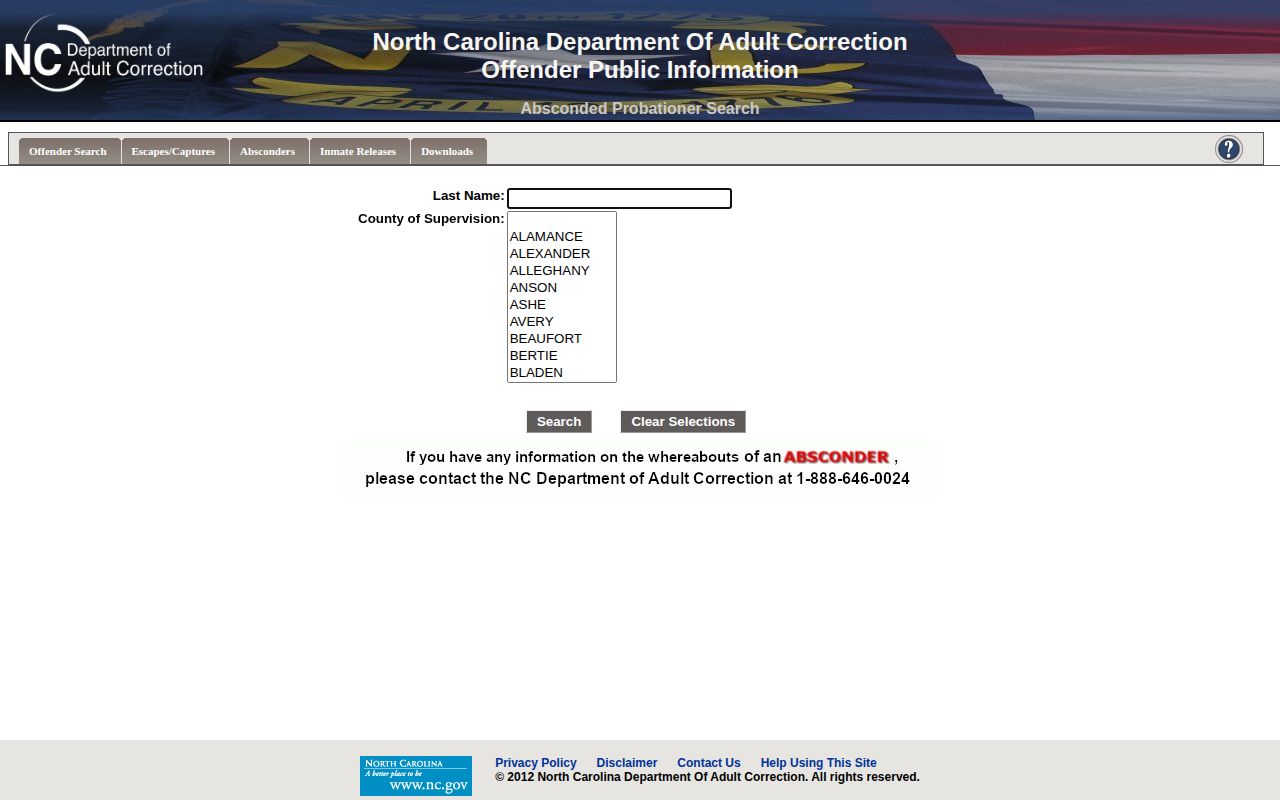
Use a match as a reason to confirm the current agency record, not as a substitute for a warrant document or final discharge record.
Yancey Parole Decisions Are Monthly
The North Carolina Post-Release Supervision and Parole Commission says it does not conduct formal parole hearings or meet personally with offenders while considering possible parole. A majority of its four commissioners must approve or deny. That structure means there is no public live-hearing calendar to use as proof of a Yancey release.
The official alternative is the Monthly Discretionary Parole Reviews index. The published sheets can use outcomes such as Incomplete Decision, Suspend Decision, Regular Parole, Community Service Parole, Early Medical Release, and 90-day Mandatory Parole. A monthly decision is not the gate timestamp. Confirm actual departure and active supervision in NCDAC.
The Commission’s official explanation documents the review model.
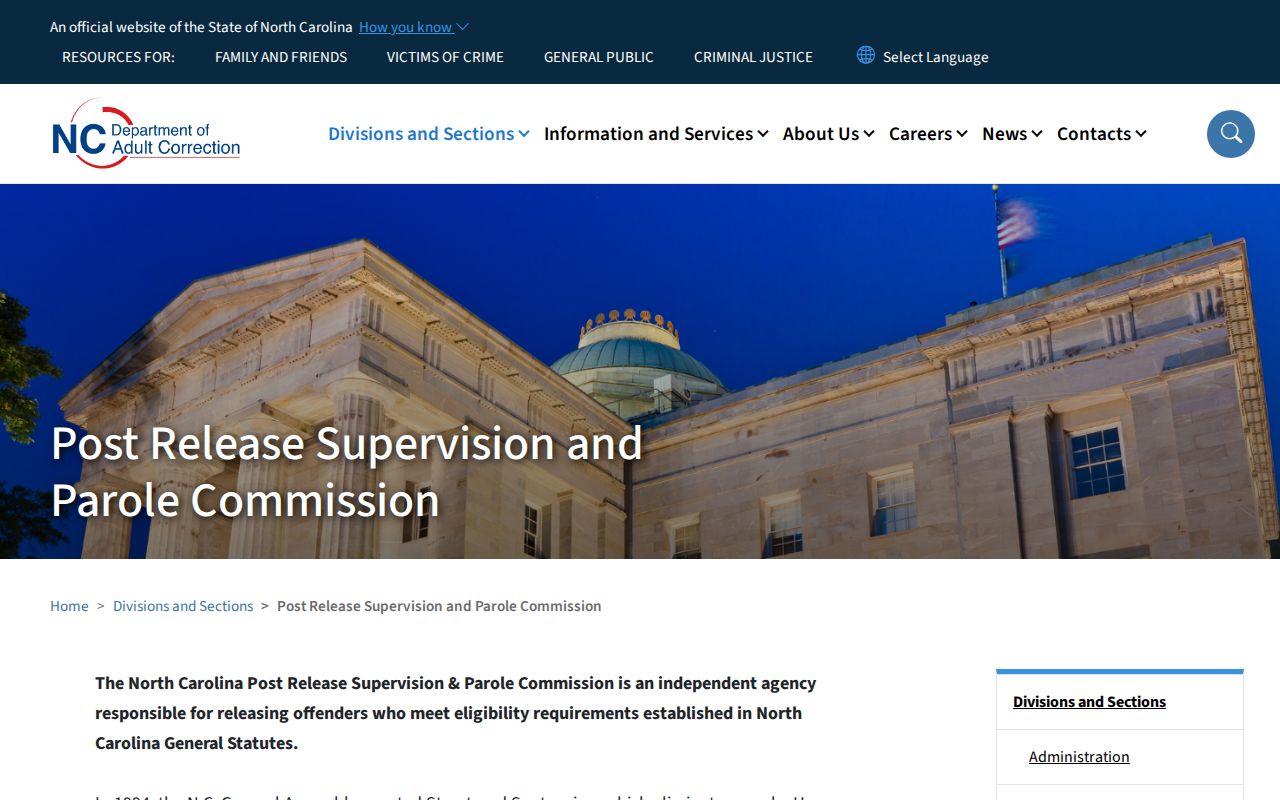
The distinction prevents a review entry from being misread as a completed release or discharge.
Yancey Reentry Needs After Release
Yancey County’s 2022 opioid needs assessment identifies transition from jail or prison and connection to services as local needs, including the view from probation and parole. It does not establish a current stand-alone county reentry office. Treat named services in an older assessment as leads that require current confirmation, not as a promise that a program is open or accepts every referral.
The official Yancey needs assessment supplies the local context. The assigned officer can verify supervision-related referrals, but reporting instructions and service eligibility must come from the responsible office. Personal needs do not change the public status field, and a completed service does not itself prove discharge.
The assessment frames continuity from confinement into the community as a local concern. That makes agency verification important before someone relies on an old provider name, location, or service description. Confirm current eligibility and intake with the provider, while keeping supervision questions with the assigned NCDAC unit. A service referral is support for reentry, not a change to the court order, sentence calculation, assigned district, or official discharge date.
Correct Yancey Supervision Records
An error must go to the custodian that can change it. A wrong Yancey sheriff custody or release-feed entry belongs in the county’s published records route. A wrong criminal-case disposition belongs with the Yancey court office listed in the Judicial Branch directory. A wrong state sentence, incarceration status, assigned office, or post-release term belongs with NCDAC.
For a state correction record, use the DAC public-records channel and identify the offender number, disputed field, and supporting record. For a county entry, follow the Yancey public-record request instructions. Sending every correction to the courthouse can delay the result because the clerk does not control the sheriff feed or DAC sentence database.
Note: Keep a copy of the status wording and observation date so the responsible office can identify the exact disputed entry.
How Yancey Supervision Ends
Supervision ends through a formal discharge or sentence completion, not merely because a name no longer appears in one search. For probation, compare the court order and NCDAC status. For parole or post-release supervision, read the state detail for active or inactive supervision and obtain the appropriate state record when the public label is unclear.
A person released from prison can have inactive incarceration while remaining active on post-release supervision. Revocation may return a person to custody. Interstate transfer moves oversight but does not erase the term. The cleanest verification is a consistent set of records: actual release, current supervision status, assigned office, and final discharge when it occurs.
Yancey Release Alerts Are Different
NC SAVAN, also called VINELink, can send custody-change alerts from participating county jails and NCDAC. It is not a complete supervision monitor. A release alert may arrive when confinement ends, while probation, parole, or post-release supervision stays active. Absconder status, office assignment, court modification, and final discharge must be checked in their own source records.
For phone, text, email, or TTY notices, use the official state service and match the reporting agency. Then return to NCDAC for the legal supervision status. The distinction matters in Yancey because a county OUT event, a state prison release, and a community-supervision discharge are three separate record events. No single alert certifies all three.
The state overview says the alert service is free and anonymous. A phone registrant uses a four-digit PIN to acknowledge notice, and an unacknowledged call can repeat for 24 hours. That receipt process does not change the person’s legal status. It only confirms that the registrant received the custody alert.