
ICE Detention Release Paths
No ICE detention center or current Yancey County ICE detention contract was verified. The official Yancey Sheriff page identifies the county facility, not an ICE center. Immigration custody must be established case by case. County release and transfer into federal civil detention are different events.
ICE release can involve conditions, parole in the immigration sense, alternatives to detention, removal, transfer, or another process. Release from ICE custody does not necessarily end an immigration case. The person’s papers identify check-in duties and the correct office. Immigration-court hearings are separate from ICE check-ins.
| Event | What it establishes | Next record |
|---|---|---|
| Yancey TRANSFERRED | County custody ended | Receiver or detainer record |
| ODLS current result | ICE or covered CBP custody in locator scope | Facility and ICE case contacts |
| Recent-release result | ICE custody ended within the published horizon | Release papers and check-in instructions |
| No result after the horizon | No conclusion about older detention | Papers, counsel, or official ICE channels |
Confirm an ICE Detention Release
The ICE Online Detainee Locator System offers an A-number search and a biographical search. Use the exact nine-digit A-number, adding leading zeroes when the official instructions require it, or enter exact biographical information. ODLS does not provide searches for people under age 18.
- Obtain a transfer or case record showing that ICE or covered immigration custody is relevant.
- Search the exact A-number when available. Otherwise use exact name and biographical fields.
- Check spelling, order, and documented name variants before treating no result as meaningful.
- Record the facility or custody result and the date the locator was checked.
- For a recent release, compare the result with the person’s release papers.
- After the recent-release horizon, use papers, authorized representatives, or official ICE channels.
The official ICE attorney information resource documents the locator scope, including its recent-release horizon.
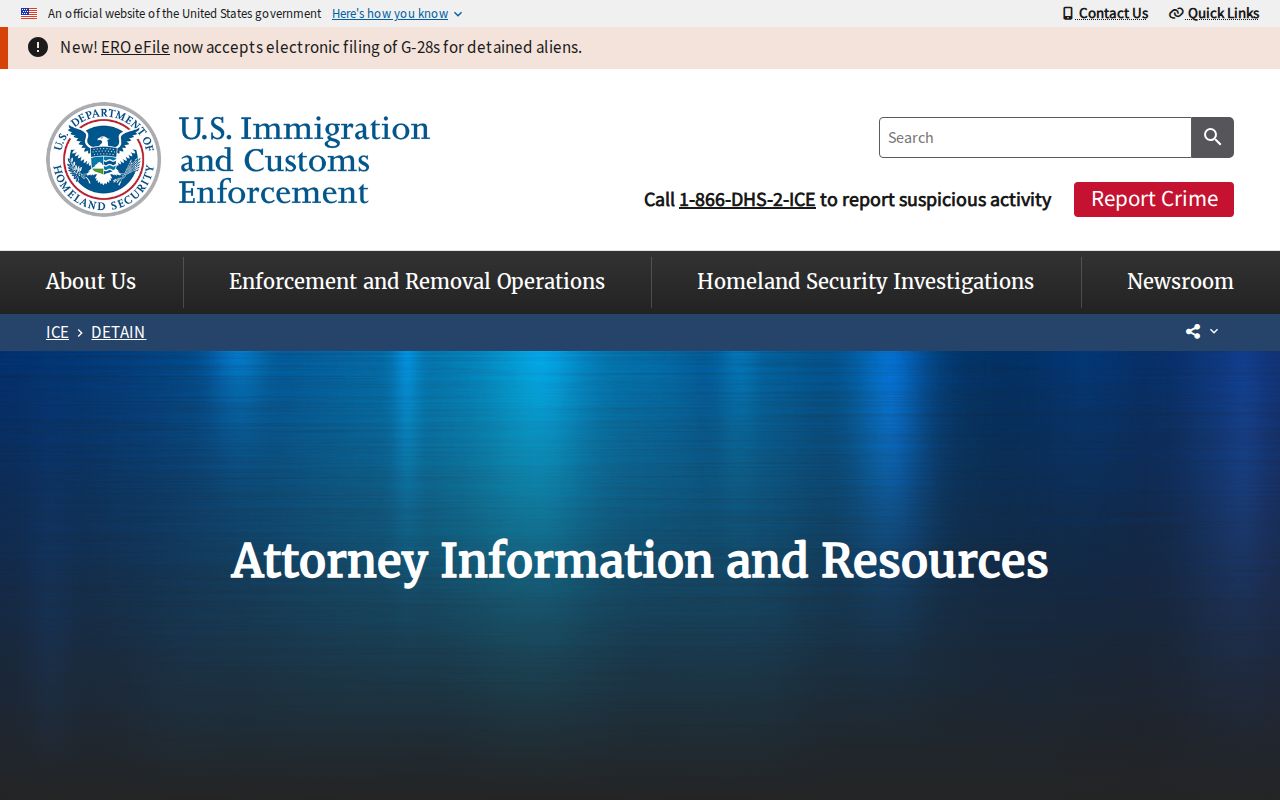
The scope notice prevents a missing result after 60 days from being mistaken for proof that ICE detention never occurred.
ICE Detention Release Papers
Release papers are the durable record after the locator’s short post-release period ends. They can identify the release action, conditions, reporting office, and future check-in duties applicable to that person. Keep every page and envelope together. A locator disappearance cannot reconstruct those terms.
Check-ins with ICE are not immigration-court hearings. A person may have both duties, at different places and times. Use the official notice for the court event and the ICE paperwork or portal for agency reporting. If an address or instruction appears wrong, seek confirmation from the issuing authority or qualified legal counsel rather than guessing.
- A-number
- The immigration identifier used for an exact ODLS search.
- ICE release
- Departure from ICE custody under the recorded immigration process.
- Alternative to detention
- A form of community monitoring or reporting instead of continued detention.
- Check-in
- A required contact with ICE that is separate from a court hearing.
ICE’s official release and check-in guidance shows how continued reporting can follow detention.
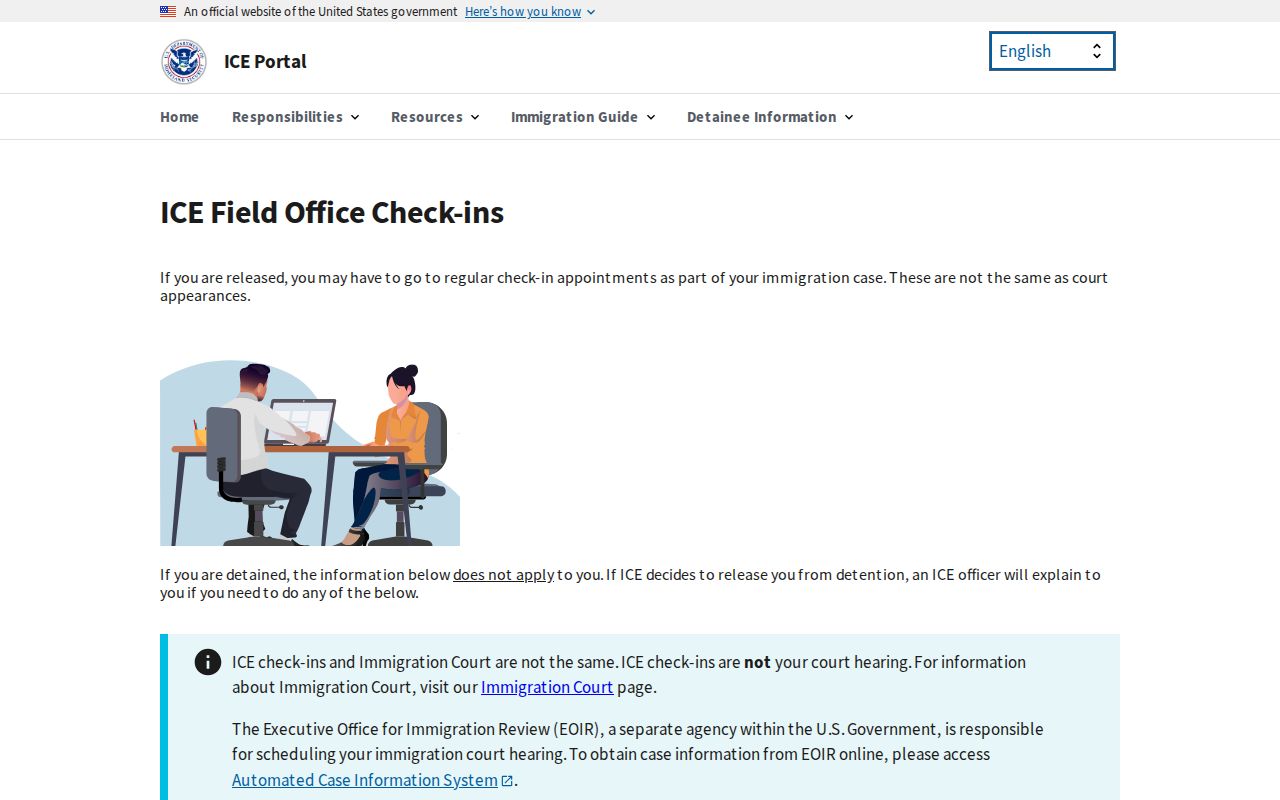
The image reinforces that release from physical detention and completion of immigration obligations are not the same event.
ICE Detention Release Contacts
Use the ODLS facility for current detention questions and the office on release papers for check-in. The county Sheriff’s Office can identify its public transfer destination. Requests for that local record follow Yancey County’s official records instructions, not ICE channels.
ICE Detention SystemFederal civil immigration custody
Use ODLS for current and recent-release searches
Use release papers and official ICE channels after the locator horizon
No Yancey County ICE facility was verified
A case-specific record should establish every move. Do not infer an ICE detention center from a Yancey transfer code alone.
About ICE Civil Detention
ICE detention is civil immigration custody. It is not a sentence in the North Carolina prison system or a BOP federal prison term. A person may move into ICE custody after local, state, or federal criminal custody, but the receiving record must support that change.
ODLS also describes covered CBP custody beyond 48 hours. Its exact scope and interface can change, so preserve the observation date and rely on the current official instructions. Searches for minors are excluded from the public locator.
Release terminology must stay tied to ICE. It says nothing by itself about a Yancey court disposition, NCDAC discharge, or BOP status. Search those systems separately when a case crossed boundaries.
ICE Locator Sixty-Day Limit
The 60-day recent-release horizon is a publication scope, not a records-retention promise. A person released 61 days earlier may disappear from public ODLS while valid release paperwork still exists. Keep the A-number, exact name, facility, release date, and issuing office with the papers.
Name variation can cause a miss even within the horizon. Retry with the exact A-number and documented biographical data. A no-result screen should never be used to contradict official release documents without direct confirmation.
Read ICE Detention Results
Exact identity data matters in ODLS. An A-number search is usually stronger than a name-only match. Biographical searches must use the official spelling and other required fields. Record the date checked because recent-release visibility expires.
A current facility result supports ICE custody within the locator’s scope. A recent-release result supports departure from ICE custody within that horizon. Neither explains every condition. Release papers provide the person-specific terms.
The Yancey County custody search helps trace the earlier county segment before an ICE search begins.
After an ICE Detention Release
Follow the reporting schedule on the release documents. A required ICE check-in and a hearing in immigration court are different events, and attending one does not automatically satisfy the other. Confirm location and date through the issuing official channel.
Alternatives to detention or other conditions may continue after physical release. Do not describe a released person as discharged from the entire immigration process unless the responsible authority’s record supports that conclusion.
No Yancey release site, pickup point, or local ICE office was established in the research. Logistics belong to the actual detention facility and the office named in the papers, not to the Yancey courthouse by default.
Keep the transfer and release timeline by custodian. The Yancey record can show when county confinement ended. ICE or the holding facility records immigration detention. ODLS supplies a limited public status view. Release papers describe the person-specific outcome and reporting instructions. An immigration-court notice supplies a separate hearing date. These sources should reinforce one another without being merged.
If the locator gives no result, check the inputs before drawing any conclusion. Confirm all nine A-number digits, including leading zeroes, and use the exact documented name. Determine whether the person is under 18, outside the locator’s stated coverage, or beyond the 60-day recent-release horizon. Then use authorized official channels and the person’s papers.
A detainer or transfer destination should be established from a real record. The Yancey mixed-status feed uses TRANSFERRED, but that code alone does not name ICE. It may point to NCDAC, another jail, USMS, or another receiver. Obtain the destination, then use the documented custodian’s locator.
Release conditions may require scheduled check-ins, address updates, monitoring, or other action stated in the documents. The word release refers to physical ICE detention, not necessarily the end of proceedings. Keep copies accessible and confirm changes through the office shown on the paperwork.
Immigration court and ICE have different functions. A court notice is not replaced by an agency check-in appointment, and the check-in is not satisfied merely by appearing for court. When dates or locations conflict, contact the issuing office or qualified counsel promptly. Do not rely on a county jail employee to interpret federal immigration documents.
No verified Yancey ICE contract means the page cannot claim a routine local handoff. Each ICE path must be supported person by person. That caution protects the key distinction between release from the county jail, transfer into civil detention, and later release from ICE custody.
For a record log, note the exact A-number used, documented name, search method, date checked, displayed facility or release status, and the office named on the papers. When the public result changes, that log helps distinguish an expired locator window from a new custody event. It also gives an authorized representative the concrete facts needed to ask the responsible ICE office a focused question.
Keep the county inmate ID and immigration A-number separate. They belong to different custodians and connect only through a supported transfer record.